
How to Check Criminal History in Ingham County
Begin with the place where the event occurred. Lansing cases start in 54-A District Court, East Lansing cases start in 54-B, and the 55th District Court serves the rest of the county within its jurisdiction. Felonies later bound over for trial move to the 30th Circuit Court. The county search accepts only one court per query, so a broad name search can miss a case when the wrong court is selected.
Gather the legal name, spelling variants, exact date of birth, event location, and an approximate year. A case number or incident number is even better. Then compare the local docket with the record creator. The local police agency holds its report, the Sheriff holds a county booking file, and the Michigan State Police keeps reportable statewide history.
- Search the likely Ingham court with the full name and exact date of birth.
- Repeat the query in each plausible district court, then check Circuit after a felony bind-over.
- Use ICHAT for the statewide reportable-history layer and note its exclusions.
- Check county custody, MI-VINE, or OTIS only when the person’s custody or supervision status matters.
- Ask the record-holding agency or court clerk for the underlying report or certified disposition.
Four Ingham Criminal Court Paths
“The county court” is not one search target in Ingham County. A misdemeanor normally stays in the correct district court. A felony begins there too, with arraignment and the probable-cause stages, but its main trial file shifts to the 30th Circuit Court only after bind-over. That movement can leave related entries in two court systems.
The official Ingham court services pages show the court routes and daily schedule links. Their layout can help a searcher choose the right court before opening a name query.
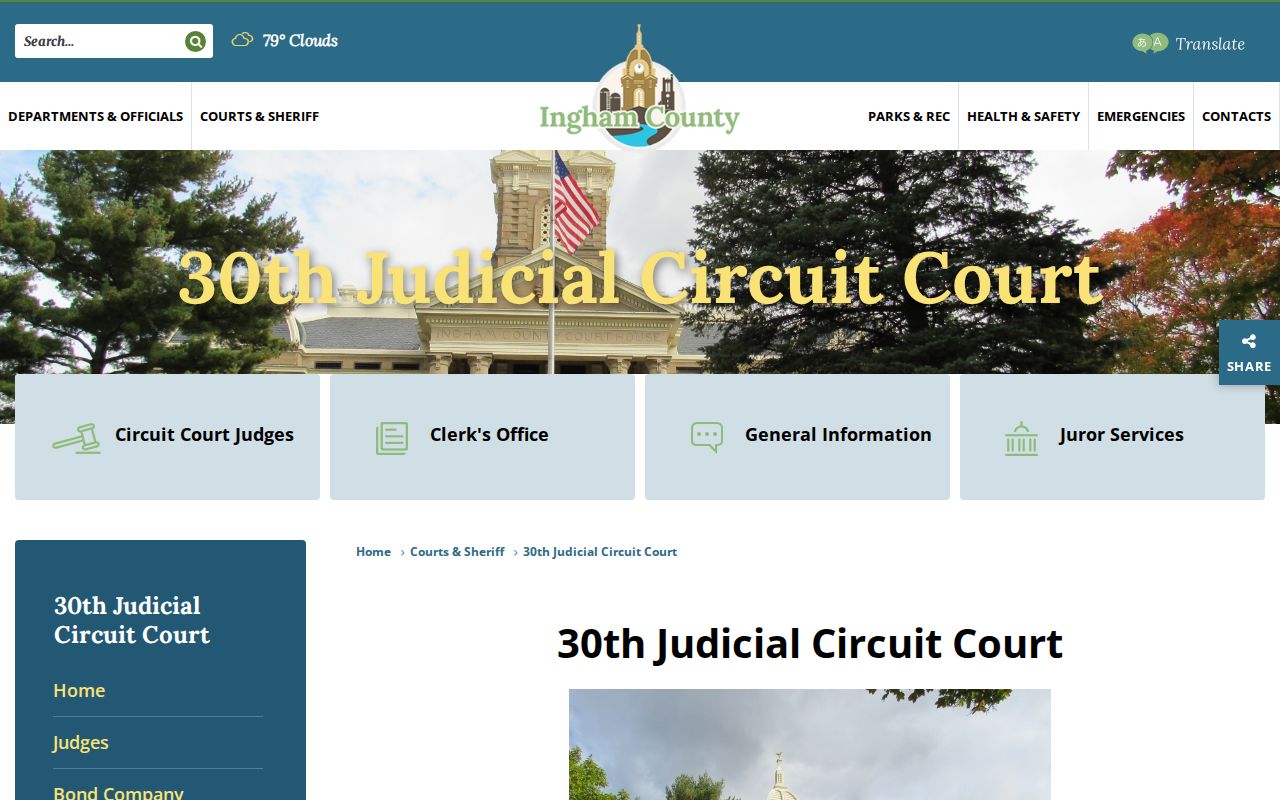
The court navigation reinforces the local rule: identify jurisdiction first, then search the matching clerk’s records.
Note: A case can appear in district court before any related felony file exists in Circuit Court.
Official Michigan Background Checks
The Michigan State Police Criminal Justice Information Center runs the Internet Criminal History Access Tool, or ICHAT. A public user creates an account and pays the advertised $10 fee for a name-based search. ICHAT covers public Michigan information reported to MSP, including felony arrests and convictions and serious-misdemeanor convictions punishable by more than 93 days.
ICHAT does not include suppressed records, warrants, federal or tribal matters, traffic records, juvenile cases, local minor misdemeanors, or events from other states. Michigan uses MSP-approved Live Scan vendors and law-enforcement sites for fingerprint checks authorized by law and for certain own-record, correction, or set-aside processes. The MSP criminal-history explanation distinguishes these routes.
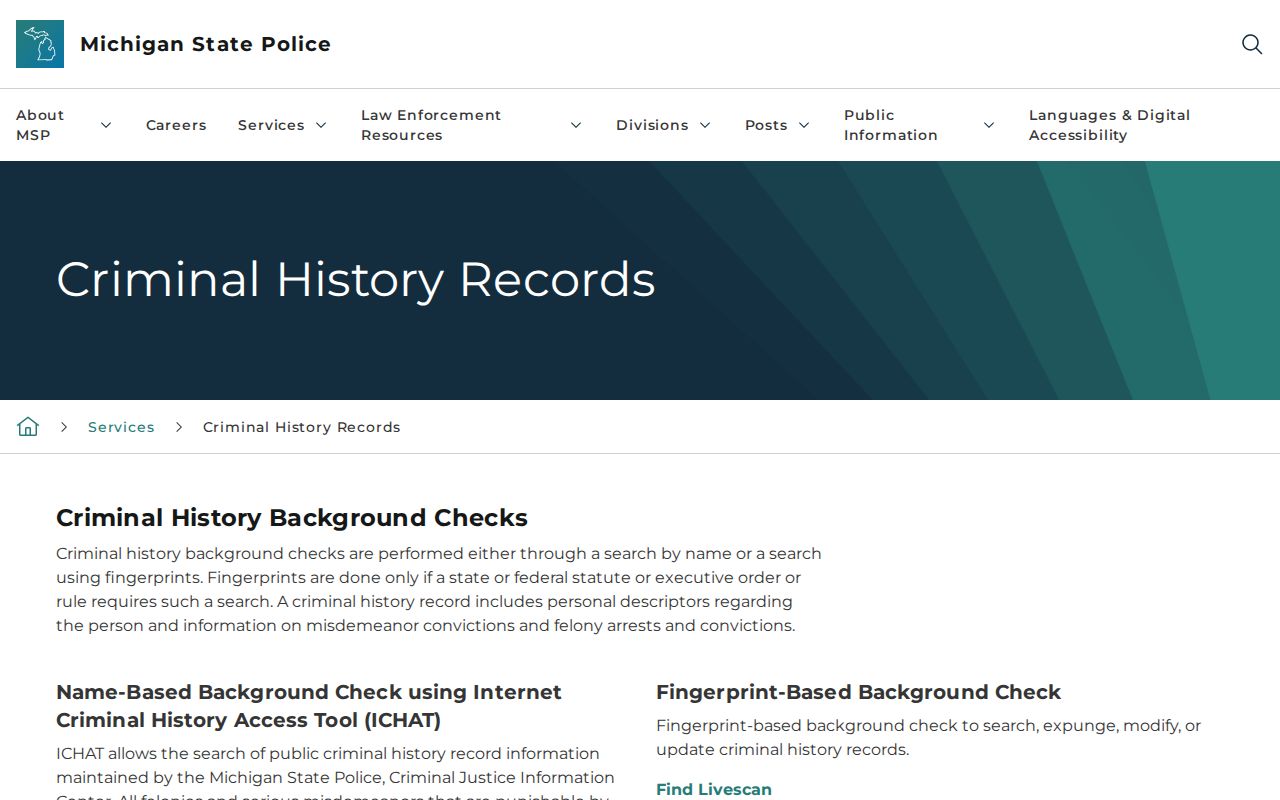
The state page is the right place to confirm current scope, approved fingerprint channels, and correction steps before ordering a product.
Search Ingham Criminal Records Carefully
Ingham’s local portal provides case context that ICHAT cannot. It shows the court, filing events, charge entries, hearings, disposition status, and other public docket data. Yet the result is only a search lead. Victim information is suppressed, personal-protection-order data is unavailable online, and criminal coverage begins in 2000. Older, certified, sealed, or image-only material requires a clerk request.
Search by case number when one is known. For a name query, enter the exact birth date and run a separate search for each plausible court. A common name and matching date can still identify the wrong person, so compare the charge, filing dates, and court before requesting a copy.
| Search field | How Ingham uses it | Key limit |
|---|---|---|
| Court | Select Circuit or the available district court | Only one court per search |
| First name | At least a first initial | Use legal spelling variants |
| Last name | At least the first two letters | Omit punctuation |
| Date of birth | Month, day, and year | Required for criminal and traffic cases |
| Case type | Select Criminal/Traffic | Results are not the official record |
Types of Criminal Records
Each part of a criminal matter creates a different file. An incident report records what an officer learned and did. A booking record documents intake and custody. District and circuit court files show the authorized charge and judicial process. ICHAT compiles reportable Michigan events, while OTIS and the Michigan Public Sex Offender Registry serve much narrower purposes.
- Incident or arrest report: held by the police agency or Sheriff that investigated the event.
- Booking or custody record: created when a person enters the Ingham County correctional system.
- District court file: holds arraignment, bond, misdemeanor, and felony preliminary-stage entries.
- Circuit court file: becomes the main felony case record after bind-over.
- State record: ICHAT compiles qualifying Michigan arrests, convictions, and dispositions reported to MSP.
Warrants are separate and are excluded from ICHAT. Probation, parole, juvenile, set-aside, and registry information also follows its own access rules. For booking-specific detail, the county’s arrest history routes explain how the police report, jail record, and court file fit together.
Ingham County Warrant Records
Ingham County does not publish one verified, complete countywide warrant database. ICHAT expressly excludes warrants. A sound check starts with the docket and the court that issued the order: 54-A for Lansing district matters, 54-B for East Lansing, 55th for the balance of the county’s district jurisdiction, or 30th Circuit for a circuit case. Ask the clerk to confirm the case number, whether the warrant remains active, and whether bond appears in the public file.
Bench warrants often follow a missed hearing or failure to comply. Arrest warrants begin a prosecution, while probation-violation warrants concern alleged supervision breaches. Search warrants may stay sealed during an investigation. A payment does not always recall a warrant, and an old web entry may lag the court’s current status. Anyone trying to resolve a warrant should verify it with the issuing court and seek legal advice about an appearance or surrender. Recheck after the court acts because law-enforcement systems may not update at once.
Ingham Custody Is Not History
A current jail result, an OTIS profile, and an ICHAT report answer three different questions. The county correctional channel can confirm a present or recent local booking. MI-VINE supports custody status and notifications. OTIS covers people within Michigan Department of Corrections scope, including state prisoners and qualifying parole or probation records, plus some discharged records within its published window.
The official OTIS information page states that county-jail and city-lockup prisoners are excluded.
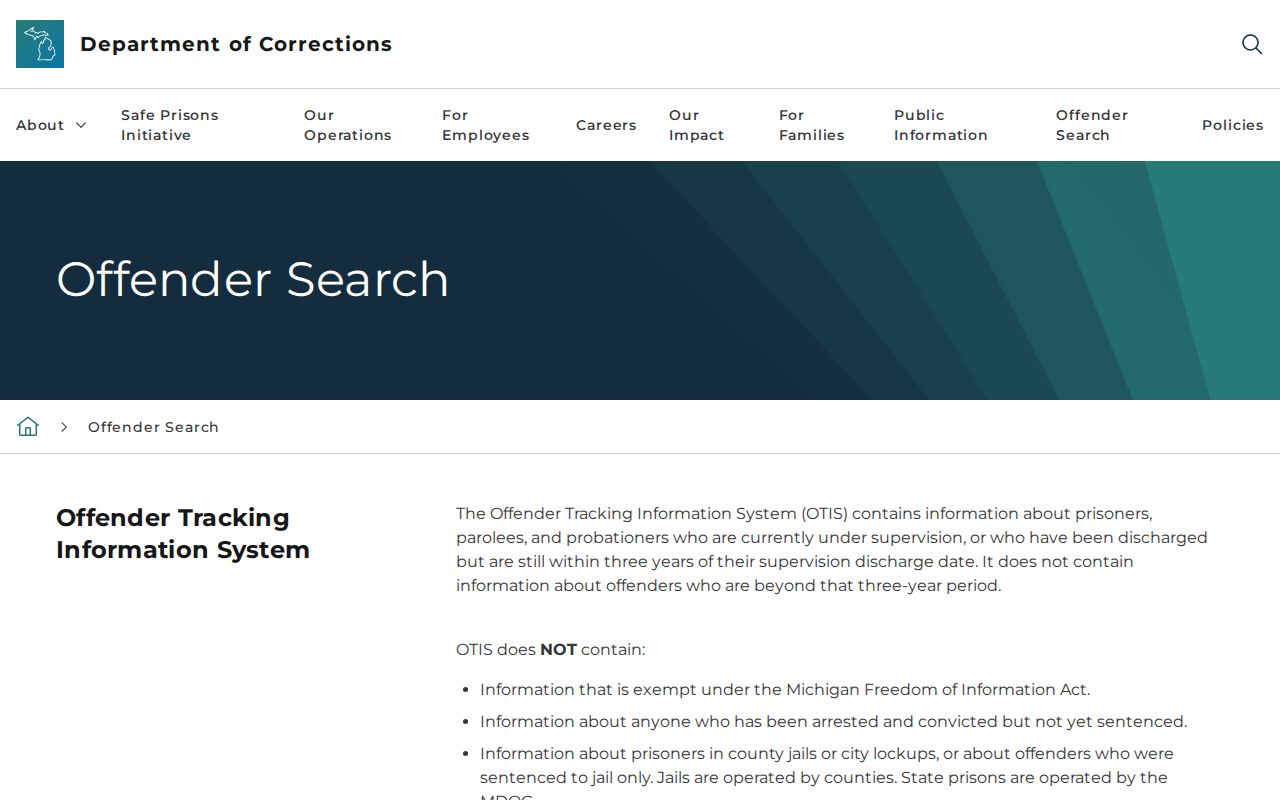
This limit matters after a recent arrest. No OTIS match may simply mean the person remains in local custody, received a jail-only sentence, or never entered MDOC supervision.
| Source | Best question | Not a substitute for |
|---|---|---|
| County custody channel | Is the person now held locally? | A long-term criminal history |
| OTIS | Is the person in MDOC custody or qualifying supervision? | County jail or every conviction |
| ICHAT | What public reportable Michigan history reached MSP? | Warrants or a full court file |
What an Ingham County Criminal Record Shows
A repository result generally starts with identity data and groups reportable arrest cycles with agencies, charge labels, dispositions, and sentences. A court file adds pleadings and a register of actions, which is the dated list of events in the case. A booking profile adds bond and custody fields. Public views withhold Social Security numbers, victim details, juvenile information, and other protected identifiers.
Read each field in the context of its source. A charge on a booking record reflects intake, while a charge on the judgment reflects the court’s final action. Missing fields may mean the source does not publish them, not that the event never occurred.
| Name and identifiers | Legal name, aliases, date of birth, descriptors, and state identifiers where public. |
|---|---|
| Arrest or booking data | Agency, event date, booking number, custody status, and charge labels when available. |
| Charges and statutes | Alleged or filed offenses, counts, and cited Michigan law. |
| Disposition | Dismissal, plea, verdict, acquittal, conviction, or other result by charge. |
| Sentence | Jail, prison, probation, fines, costs, restitution, or other ordered terms. |
| Custody or supervision | Local holding, MDOC status, court probation, or parole where the source publishes it. |
What Ingham FOIA Cannot Provide
The County FOIA Center handles executive-branch county records, including Sheriff material that is not already posted. It does not provide court files. Michigan FOIA excludes the judiciary from the definition of a public body, so complaints, judgments, certified dispositions, and registers of actions must go to 30th Circuit, 54-A, 54-B, or 55th District Court.
The county’s FOIA Center and court-record notice makes that split clear.
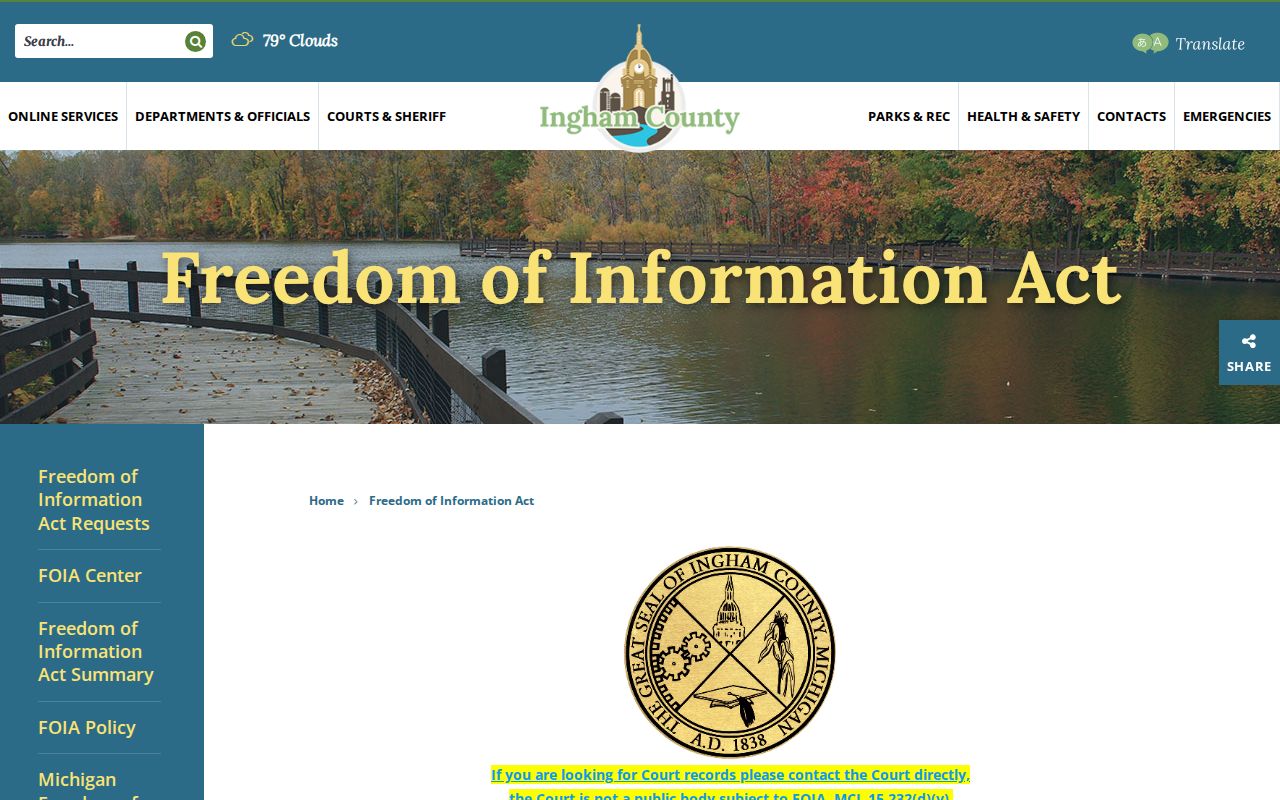
For Sheriff records, a focused request should identify the record type, incident or booking number, date range, location, subject, and preferred delivery. Police reports created by Lansing, East Lansing, Mason, MSP, or a campus department stay with that agency.
Public Access Laws
Michigan uses separate rules for agency records, court records, repository data, set-asides, and registry information. Public access never turns a name match into proof of identity. It also does not permit threats, deception, or attempts to obtain sealed, juvenile, victim, or other protected material.
The holder controls the request route. County and city agencies apply FOIA, court clerks apply judicial access rules, and MSP applies the statutes governing repository and registry data. A denial or redaction should identify the rule used and any appeal path that applies.
Key Michigan laws:
MCL 15.231–15.246 governs public access, fees, exemptions, and appeals for executive-branch records.
MCL 28.242 governs collection and authorized access to state criminal-identification records.
Michigan Court Rule 8.119 governs court-record access outside county FOIA.
MCL 780.621 et seq. controls application and automatic routes for setting aside eligible convictions.
MCL 28.721 et seq. controls sex-offender registration, public information, duties, and penalties.
From Ingham Arrest to Felony File
An officer’s arrest label is not the prosecutor’s final charge. The arresting agency writes the report and, for a reportable offense, sends fingerprints and identifiers toward MSP. If the person is lodged, the Sheriff creates a separate booking. The prosecutor may authorize a different offense, reduce or add charges, or decline a charge. The district court then opens the first judicial record.
The Ingham County Prosecuting Attorney works from the downtown Grady Porter Building. Its official contact page shows the office and its role across the local courts.
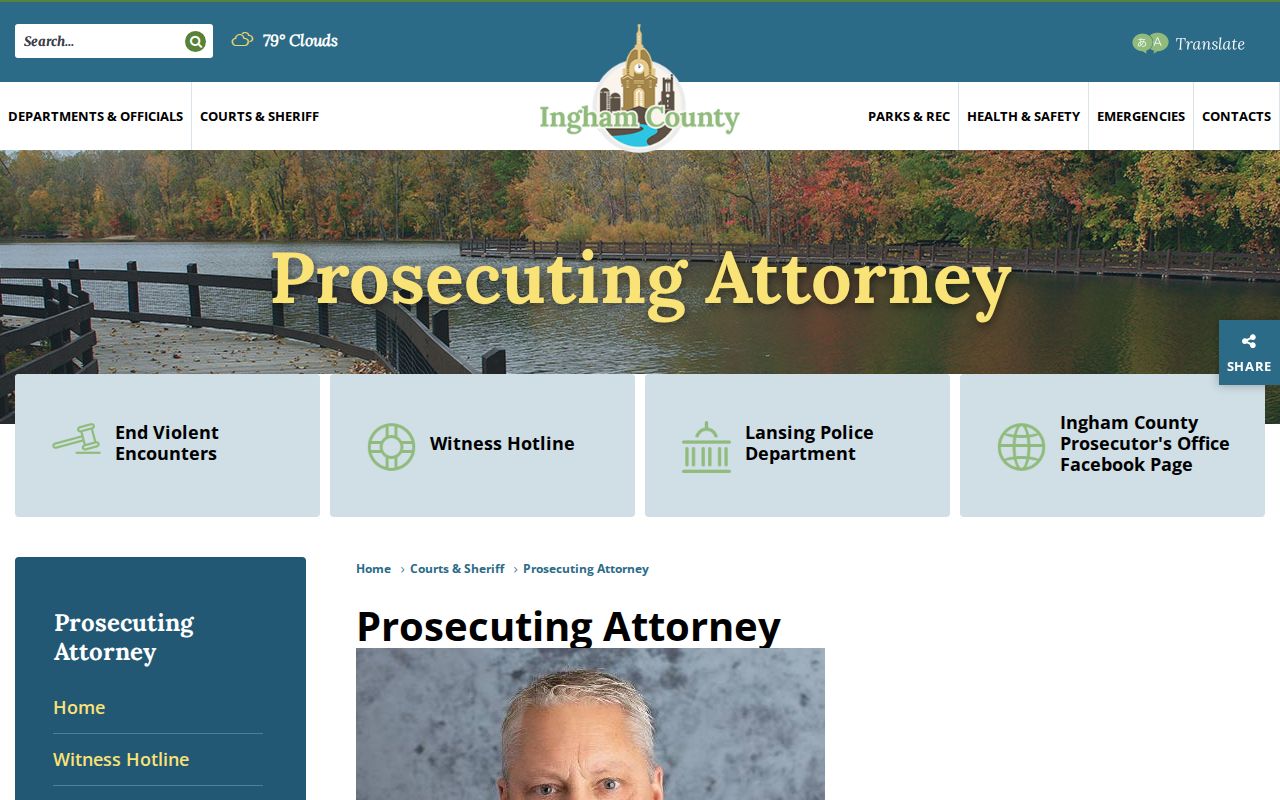
After a felony is bound over, the prosecutor files an information and the 30th Circuit docket becomes the main trial record. The flow is: Arrest → Booking if lodged → Prosecutor review → District arraignment → Preliminary stages → Circuit bind-over → Disposition.
Note: A booking charge may change before the first court filing and should never be read as a conviction.
Sealed, Expunged, and Restricted Records
Michigan calls conviction relief “setting aside,” while agencies also use “expungement.” Application-based relief starts in the court of conviction and requires the current judicial forms, certified conviction material, fingerprints, and notice steps set by statute. Eligibility and waiting time depend on the number and type of convictions, later cases, sentence completion, and statutory exclusions.
Clean Slate also provides automatic set-asides for eligible records after statutory waiting periods, subject to exclusions and matching limits. A person should still check the local docket and ICHAT. If a cleared record remains public, obtain the order, ask the clerk to confirm the register, and use the MSP correction route. A nonpublic record can remain available for limited uses authorized by law.
Reading an Ingham Case Outcome
The register of actions is the dated court timeline, not a plain-language summary. “Dismissed” means the charge ended without a conviction on that count. “Bind-over” means the felony moved from district court to Circuit after the preliminary stage. “Disposition” means the outcome. Probation reviews, warrants, and specialty-court status hearings can add many entries after the plea or judgment.
The Ingham County Public Defender publishes plain-language criminal-case resources and office contacts.

That resource helps explain procedure, but the clerk’s certified judgment remains the source for an authenticated outcome. The Public Defender is not a general record-retrieval office.
Criminal Records by City in Ingham County
City boundaries decide which police agency writes the report and which district court begins the case. Lansing, East Lansing, and Mason therefore have distinct request paths even though each can feed the county jail, 30th Circuit, and MSP systems. The 2020 Census baseline identifies these as the three largest incorporated cities wholly or partly in Ingham County.
Use the city guide when the main need is a police report, local court route, or city-specific request form. Use the county record pages for deeper custody, case, arrest, and statewide-history context.
Lansing Criminal History
112,644 in the 2020 Census · Lansing Police reports and 54-A District Court records.
East Lansing Criminal History
47,741 in the 2020 Census · ELPD Police Records and 54-B District Court files.
Mason Criminal History
8,283 in the 2020 Census · Mason Police reports and 55th District Court records.
Ingham Specialty Court Docket Events
Ingham’s specialty-court system includes sobriety, mental-health, veterans, and domestic-violence approaches. The 55th District Court’s Sobriety Court is one named example. These programs can make a docket look different from a simple plea-and-sentence timeline because assessment, testing, treatment, review hearings, incentives, sanctions, and completion may each produce an entry.
Use the event label and date as a clue, then ask the clerk for the public document when the portal provides no image. Treatment details, medical information, and other protected material should not be inferred from a short docket phrase. The final judgment and later discharge entries remain the best sources for the formal case result.