
Arrest History in Ingham County
An Ingham County arrest may begin with the Sheriff, Lansing Police, East Lansing Police, Mason Police, Michigan State Police, Michigan State University Police, or another agency with authority at the event location. The arresting agency writes the incident and arrest report. The county jail creates a separate booking record only if the person is lodged. Fingerprints for a reportable offense go to Michigan State Police, and the proper district court creates an arraignment and charging docket.
The Ingham County Sheriff’s official homepage is the central route for sheriff services and correctional contacts.
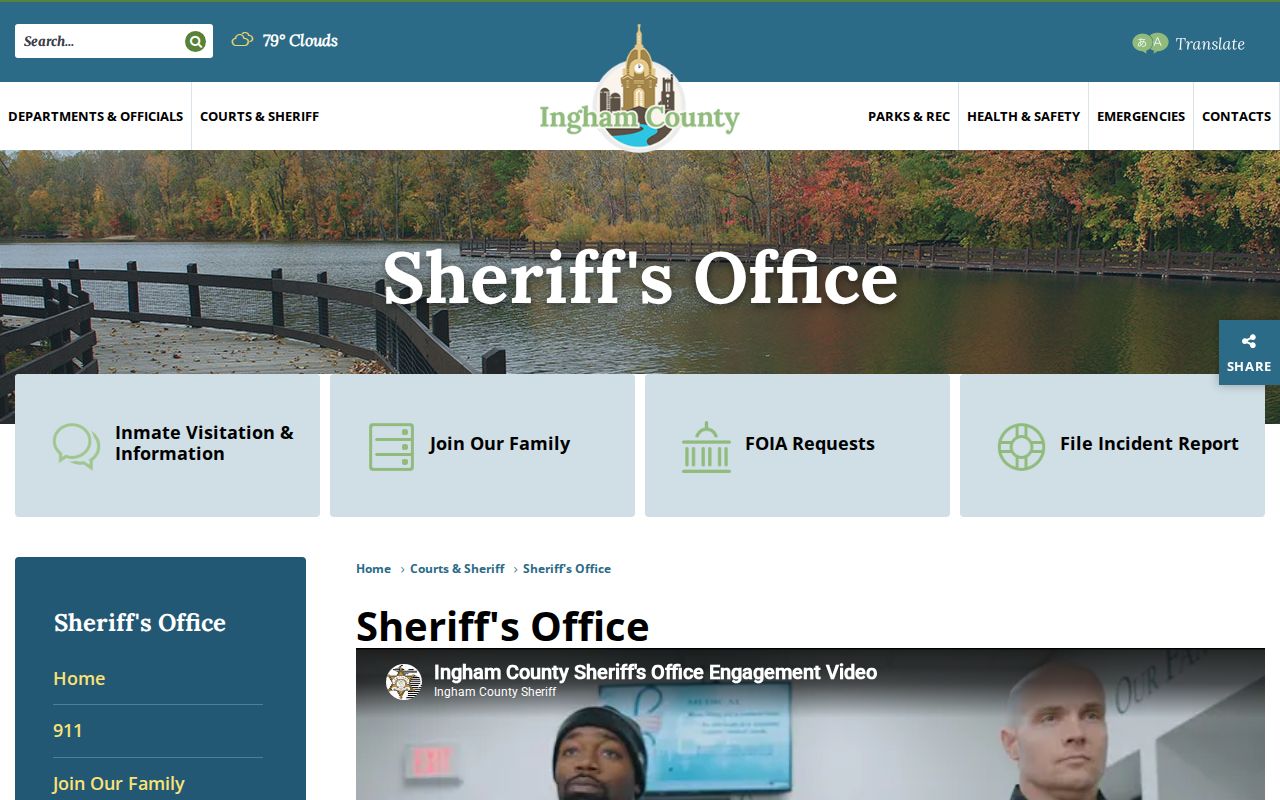
It is the right starting point for sheriff incidents and county booking questions, but not for every city police report.
Four Ingham County Arrest Records
One arrest can create four related files. The police report records the alleged event and grounds for arrest. The booking sheet records intake, custody, bond, and release. The court file records charges the prosecutor actually filed and the outcome. ICHAT later compiles reportable Michigan history received by the state repository. They do not update at the same time, and one system’s charge label can differ from another.
- Incident report
- The arresting agency’s account of the event, evidence, and officer actions.
- Booking record
- The jail’s intake and custody file, created if the person is lodged.
- Court docket
- The clerk’s record of filed charges, hearings, orders, and disposition.
- ICHAT history
- Michigan State Police’s public compilation of qualifying reportable events.
The four-record model also explains gaps. A person may have a police report without a county booking, or a booking charge that never becomes the court’s filed charge. Compare dates, identifiers, and agency names before tying records together.
How to Look Up Ingham County Arrests
Start with the newest and most local source, then move outward. A name missing from current custody may reflect quick release, transport, or portal lag. A court search may reveal the authorized charge even after the booking has rolled off. ICHAT is useful for reportable statewide history but excludes warrants, traffic, juvenile, federal, tribal, local-misdemeanor, out-of-state, and suppressed records.
- Check the Sheriff correctional channel and MI-VINE for current custody, using full name and a booking number if available.
- Call the Sheriff at 517-676-2431 or verify at the correctional lobby when a very recent booking has not appeared.
- Search 54-A for Lansing, 54-B for East Lansing, and 55th for the rest of Ingham County; check 30th Circuit after felony bind-over.
- Request the incident report from the arresting agency, and use County FOIA for sheriff booking material not indexed online.
- Use ICHAT for statewide reportable history, OTIS for MDOC custody or supervision, and the court clerk for the disposition.
The Ingham County FOIA Center is the formal route for older sheriff booking sheets, jail movement or release records, and sheriff reports that are not already published. Ask for the exact record type. Court files are excluded from county FOIA and must go to the court clerk.
Ingham County Sheriff’s Office
Mason, MI
517-676-2431
Call for sheriff records and current correctional access.
Note: Identify the event date, place, agency, incident number, and exact record needed before filing a request.
Ingham Arrest Report or Booking Sheet
The correct custodian depends on the document. Lansing Police keeps its incident and arrest reports, even if the Sheriff later booked the person. The Sheriff keeps its own reports and the county jail’s booking records. East Lansing Police, Mason Police, MSP, MSU Police, and Lansing Community College Public Safety each retain records created by their officers. Asking the jail for a city police narrative will not produce the report.
The Lansing Police Department page identifies the city agency and its service gateway.
Use that city channel for a Lansing incident, then use the sheriff channel only for county custody records.
Lansing’s official FOIA page supplies the public-record request route.
A narrow request for the specific incident or arrest report is easier to process than a broad demand for all records.
What an Arrest Record Shows
An arrest report and booking profile overlap but answer different questions. The report can include the event number, arrest time and place, alleged offenses, warrant or warrantless authority, officer narrative, evidence, property, vehicle details, and transport destination. A booking profile focuses on intake, identifiers, custody status, bond, and court assignment. Victim, juvenile, medical, precise housing, and other protected information is withheld or redacted.
| Booking Number | The jail’s unique identifier for the custody event. |
|---|---|
| Booking Date & Time | When intake was recorded, which may follow the arrest time. |
| Arresting Agency | Identifies which office holds the incident report. |
| Charges | Allegations entered at booking, subject to prosecutor review and court action. |
| Bond | May list type, amount, conditions, or no-bond status by charge. |
| Mugshot Policy | A photo may be withheld based on law, investigation concerns, privacy, or agency policy. |
| Release Status | Shows custody or release information when the public system is current. |
For an older event, request only the fields and documents needed. Booking photographs, 911 audio, CAD logs, videos, jail movement records, and police narratives are distinct items with different retention and redaction rules.
East Lansing Ingham Arrest Records
East Lansing Police Records is a separate access channel. It handles ELPD-created police reports and explains the city’s FOIA process. Its published contact is 409 Park Lane, East Lansing, MI 48823; 517-351-4220, option 5; and foia@elpolice.com. A person held after an ELPD arrest may also have a Sheriff booking record and a 54-B District Court case.
The ELPD Police Records page shows the city records and FOIA route.
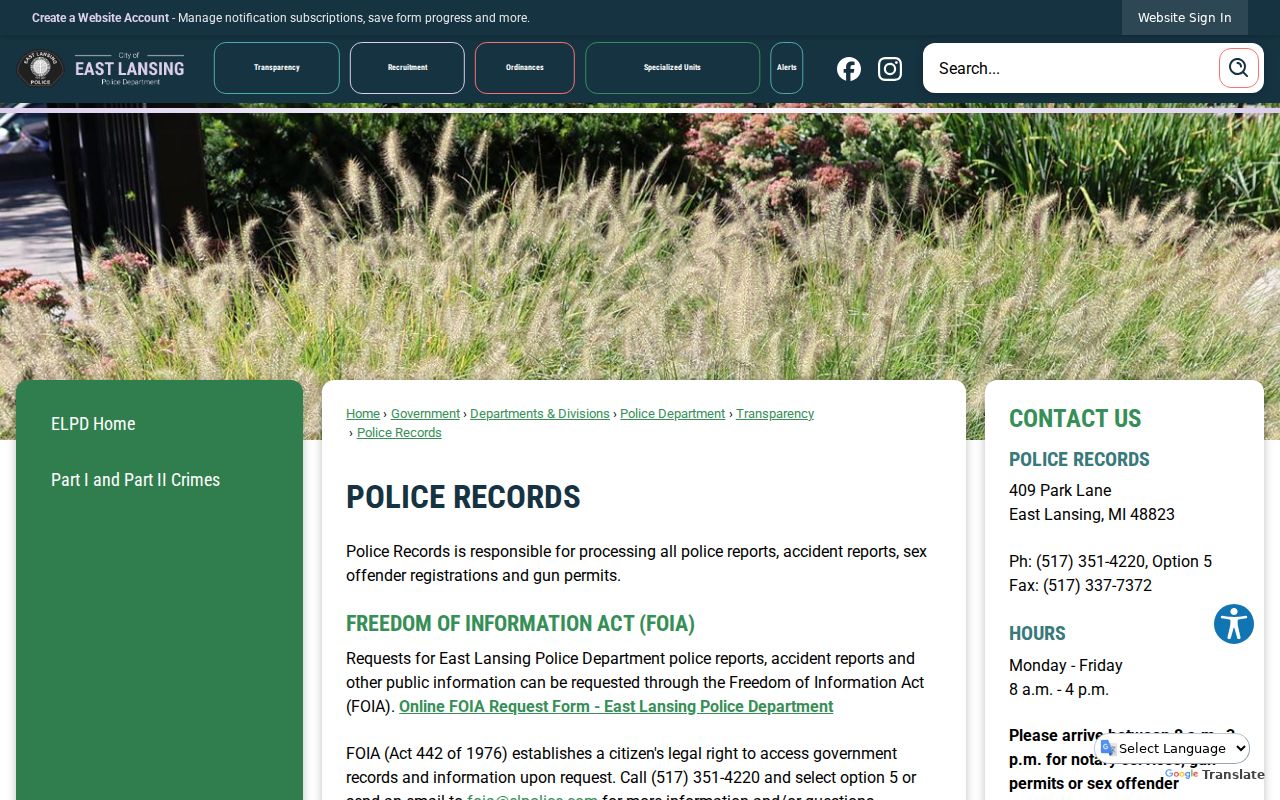
Using the city and county channels together keeps the incident narrative separate from the later custody file.
Recent Arrests and Booking Logs
No clearly verified official daily Ingham County booking blotter was found in the research sweep. Use the Sheriff’s current correctional channel for county custody rather than an unofficial mugshot gallery. A current roster or vendor search may accept last name, first name, and a booking or inmate number. Confirm the active search link and its scope through the Sheriff because vendors can change.
Custody data can show a booking date, charge description, bond, facility, release status, and scheduled court information when populated. It is not a lifetime arrest history. A person released soon after arraignment may disappear from a current-only view, and someone held in a city lockup, another county, state prison, or federal custody will not belong on the Ingham jail list.
When the current search is empty, request an older booking sheet or release record through the county channel. Describe the approximate admission and release dates, full name, booking number if known, and desired fields. The agency may redact protected information or withhold material tied to an active investigation under Michigan law.
MI-VINE Ingham Arrest Custody Alerts
Michigan VINELink offers custody-status searching and notifications. It is the verified mobile-friendly alert route for a custody change; no official Sheriff-branded Apple or Google app was confirmed. MI-VINE can help track transfer or release, while the Sheriff remains the source for the county booking record itself.

Notification data should be checked against the jail or court because custody status and the legal case move on separate timelines.
OTIS covers Michigan prisoners, parolees, qualifying probationers, and recently discharged people within its stated scope. It excludes county-jail and city-lockup prisoners, jail-only sentences, and people arrested but not sentenced. A recent Ingham County arrestee usually will not appear there.
Ingham Arrest Booking to Arraignment
After transport, staff confirm identity, inventory property, screen for medical and mental-health needs, take fingerprints and a photograph, enter warrants and charges, and classify custody. Those intake steps create the jail record. The prosecutor and court track develop in parallel. At arraignment, the court states the charges, advises the person of rights, and addresses release or bond conditions.
Record flow: Arrest › Intake › Fingerprints › Booking › Prosecutor Review › Arraignment › Court Disposition
A felony stays in the proper district court for its probable-cause conference and preliminary examination. It moves to 30th Circuit only after bind-over. That explains why a recent arrest may appear in 54-A, 54-B, or 55th before any circuit record exists.
Michigan requires prompt presentment, but no single fixed appearance hour applies to every booking. Check the court’s current daily schedule and confirm custody with the jail instead of predicting arraignment from the intake time alone.
Arrests vs Convictions
An arrest record documents an accusation and custody event. A conviction record documents a court judgment after a plea or verdict. Prosecutor review may reduce, replace, add, or decline the officer’s listed charge. The later court disposition is therefore the key record for learning whether the arrest led to a conviction, dismissal, or acquittal.
| Point | Arrest Record | Conviction Record |
|---|---|---|
| Created by | Arresting agency and jail | The court |
| What it establishes | An arrest or booking occurred | A finding of guilt was entered |
| Where it lives | Police, sheriff, booking, and repository systems | Court clerk and reportable state history |
| Possible outcome | Release, no charge, or a changed charge | Sentence, appeal, or later set-aside |
Review the related Ingham County criminal court case to follow the authorized charge through disposition. A dismissal or acquittal does not erase every police or booking record automatically. If ICHAT shows an incorrect arrest cycle, obtain the certified disposition and use the court and MSP correction route.
First identify whether the arresting agency’s data or the court disposition is wrong. Certified proof from the clerk lets Michigan State Police match a correction to the reportable arrest cycle. A court unable to update the disposition electronically may use the state’s judicial correction process.
Note: An arrest is not proof of guilt, and many bookings do not end in a conviction.